


The 10 best dive sites in Lanzarote: a guide to diving spots

Choosing the best dive sites in Lanzarote is not easy. The island’s volcanic origin has created walls, drop-offs, caves, sandy plains and lava reefs that vary a lot between Playa Blanca, Puerto del Carmen and the Chinijo Archipelago.
This guide starts with the 6 must-do dives in Playa Blanca, where we usually dive, and adds 4 gems from the rest of the island. At the end you will find the full list of dive sites in Lanzarote, each with its own guide.
Summary: the 10 best dive sites at a glance
| Dive site | Area | Depth | Level |
|---|---|---|---|
| Playa Flamingo | Playa Blanca | 5–18 m | All levels |
| Pechiguera Lighthouse | Playa Blanca | 20–50+ m | Advanced / deep |
| Punta Berrugo | Playa Blanca | 12–18 m | All levels |
| Museo Atlántico | Playa Blanca | 12–14 m | All levels (with an authorised guide) |
| Las Coloradas and El Emisario | Playa Blanca | 12–18 m | All levels |
| Las Lenguas | Playa Blanca | 5–22 m | All levels |
| The Cathedral | Puerto del Carmen | 25–40+ m | Advanced / deep |
| Quíquere wrecks | Puerto del Carmen | 12–40 m | All / advanced (depending on depth) |
| Blue Hole | Puerto del Carmen | 18–40+ m | Advanced |
| La Roncadera and Bajón de las Gerardias | La Graciosa | 18–35 m | Advanced |
The 6 best dives in Playa Blanca
1. Playa Flamingo (Flamingo Wall)
5–18 m · All levels (Open Water / Scuba Diver)
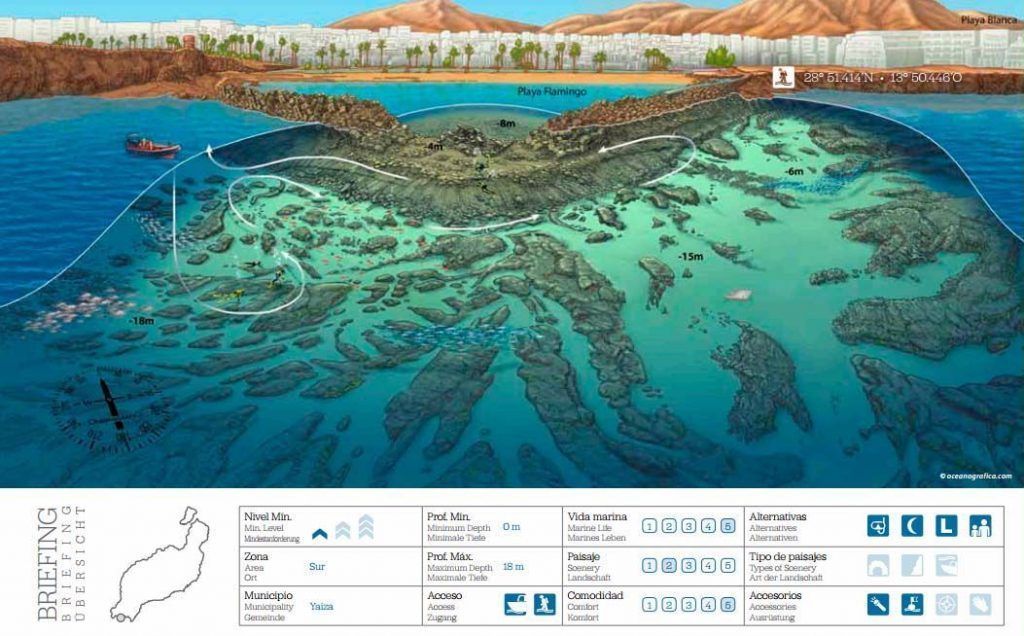
Playa Flamingo is the star dive of Playa Blanca for the amount and variety of life. The breakwater and the slope down to the sand gather huge schools of grunts, salema, bogue and barracuda.
On the sand it is very common to find angel sharks, especially in winter, as well as stingrays, butterfly rays and electric rays. Among the rocks you will see giant anemones and groupers.
2. Pechiguera Lighthouse
20–50+ m · Advanced / deep
Pechiguera Lighthouse is the big deep dive of the south: a spectacular pyramid-shaped volcanic pinnacle in the La Bocaina strait. Exposed to currents, it attracts pelagic life such as amberjacks, tuna and large schools of bogue, and its deepest parts are home to black coral colonies.
It requires good planning and experience in currents. The deepest parts are beyond recreational diving limits.
3. Punta Berrugo
12–18 m · All levels
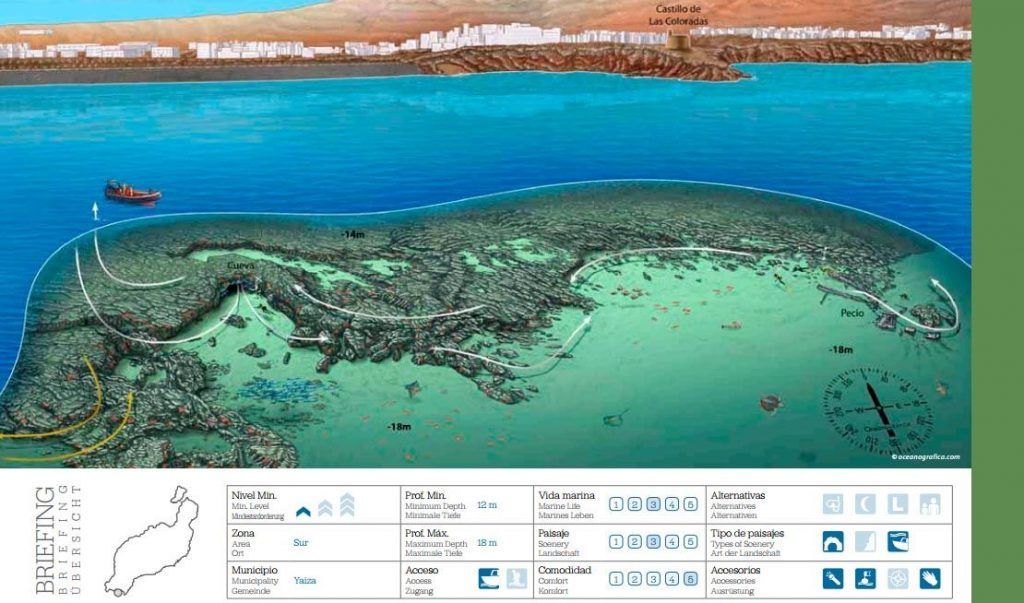
Punta Berrugo is a very enjoyable route opposite Marina Rubicón. It combines white sand, lava tongues, ledges and small hollows. You will often meet schools of barracuda, dentex and rays, and find octopuses hiding in the cracks.
4. Museo Atlántico
12–14 m · All levels (with an authorised guide)
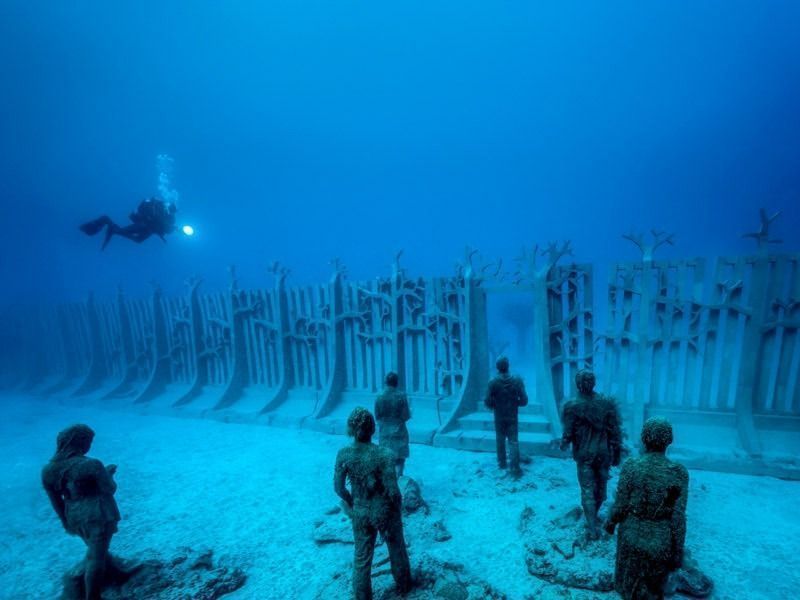
The Museo Atlántico was Europe’s first underwater museum and is the work of artist Jason deCaires Taylor. Its more than 300 pH-neutral concrete sculptures act as an artificial reef and attract more and more schools of sardines, barracuda and seabream. Angel sharks are also often seen resting next to the figures.
You can visit it even if you are not certified with our try dive at the Museo Atlántico. The official Canary Islands tourism website has more information about the museum.
5. Las Coloradas and El Emisario
12–18 m · All levels
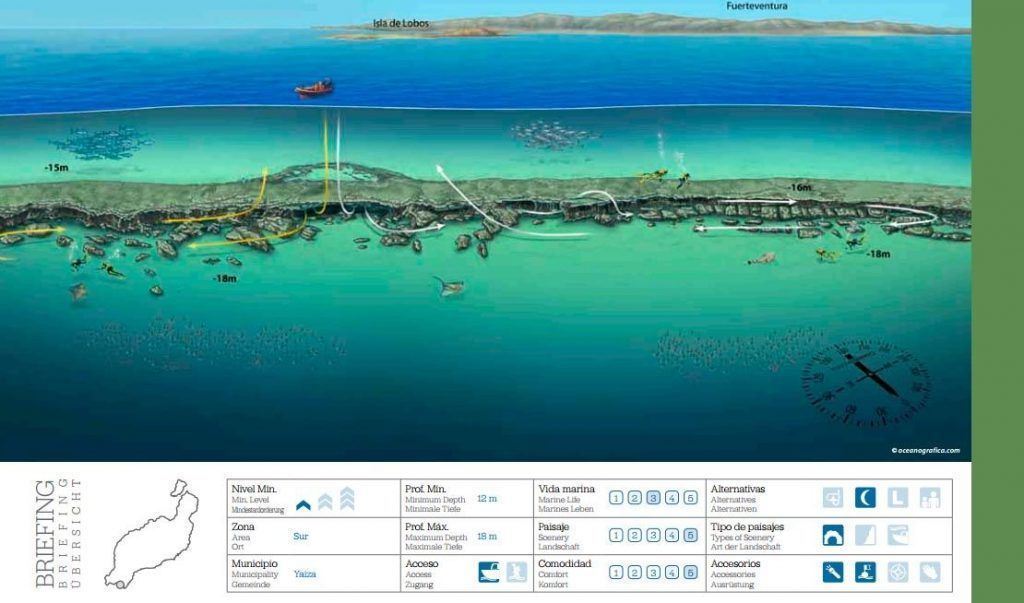
Las Coloradas is a drop-off with ledges, a small natural arch and cracks full of macro life, bigeyes and cardinalfish.
Close by is El Emisario (Twin Pipes), famous for the contrast between the sunken pipes and the white sand, where angel sharks and stingrays often rest.
6. Las Lenguas
5–22 m · All levels
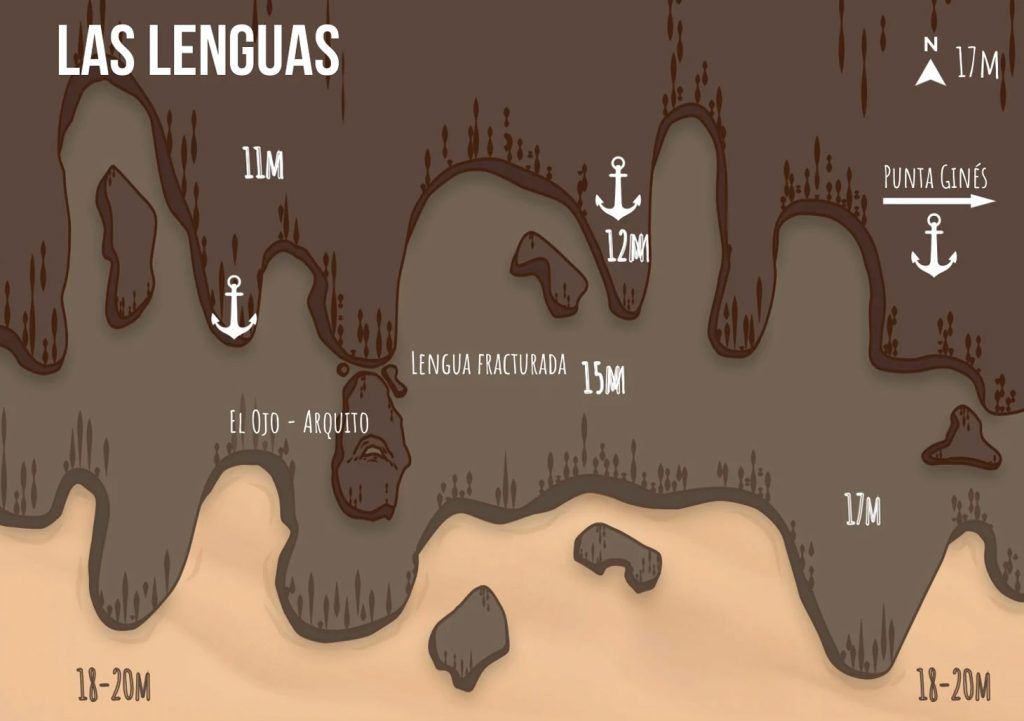
Las Lenguas are volcanic formations in Playa Blanca bay that stand out for their excellent visibility and the contrast of light between the dark rock and the pale sand. They are ideal for a relaxed dive looking for stingrays, butterfly rays, nudibranchs and schools of coastal fish.
4 must-do dives in the rest of Lanzarote
7. The Cathedral (Puerto del Carmen)
25–40+ m · Advanced / deep
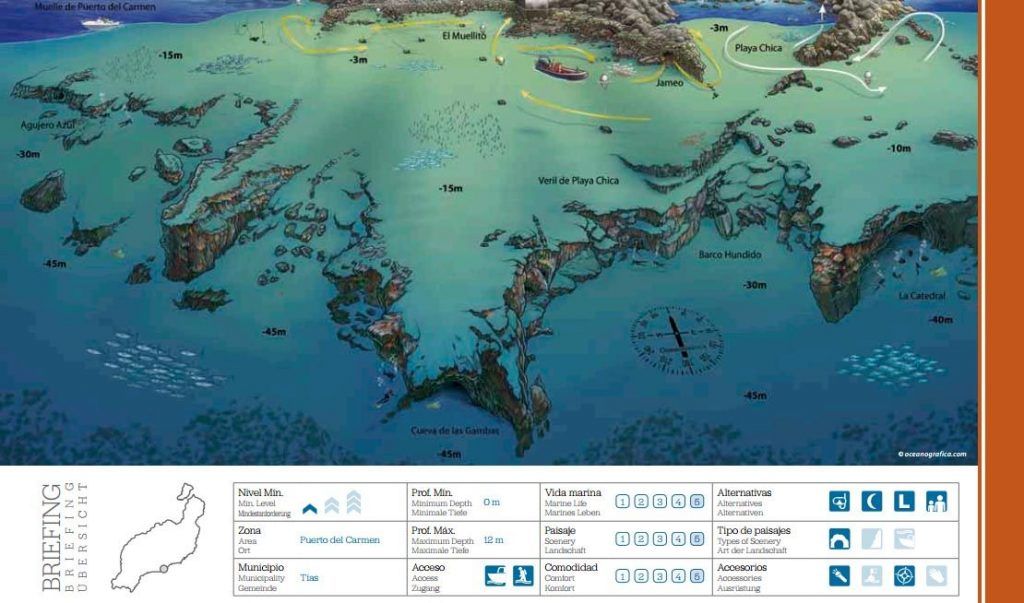
The Cathedral is probably the most iconic dive in Puerto del Carmen: a huge volcanic vault open to the blue on the Playa Chica drop-off. It is home to the famous grouper known as “Félix”, the ceiling is covered in narwhal shrimps and the backlighting is spectacular.
8. Barranco del Quíquere wrecks (Puerto del Carmen)
12–40 m · All levels / advanced (depending on depth)
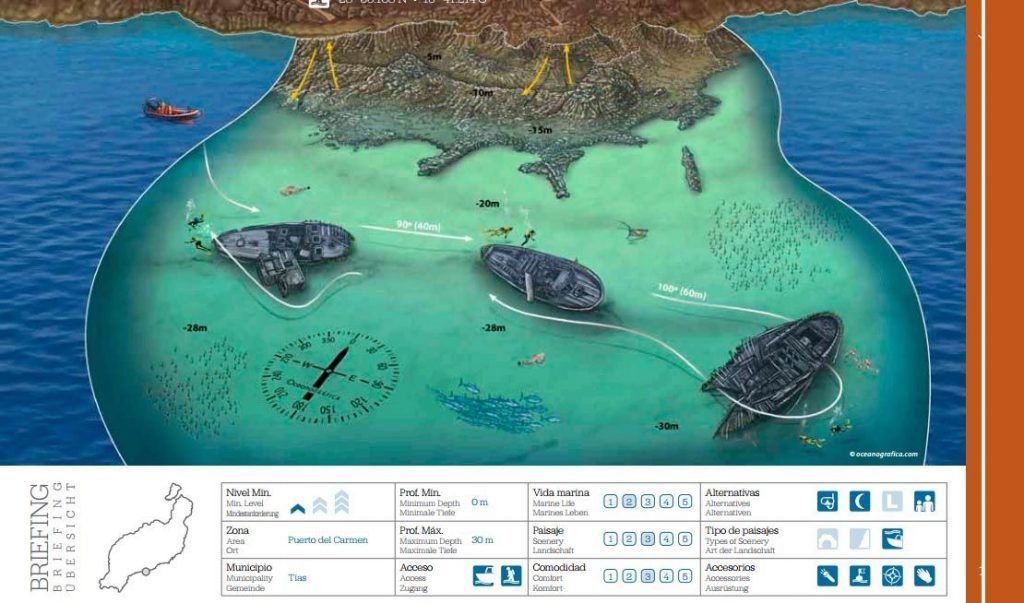
The Barranco del Quíquere wrecks are three fishing boats sunk in steps on a sandy slope. They let you explore well-preserved structures surrounded by schools of grunts and barracuda, with angel sharks on the sand around them.
9. Blue Hole (Puerto del Carmen)
18–40+ m · Advanced
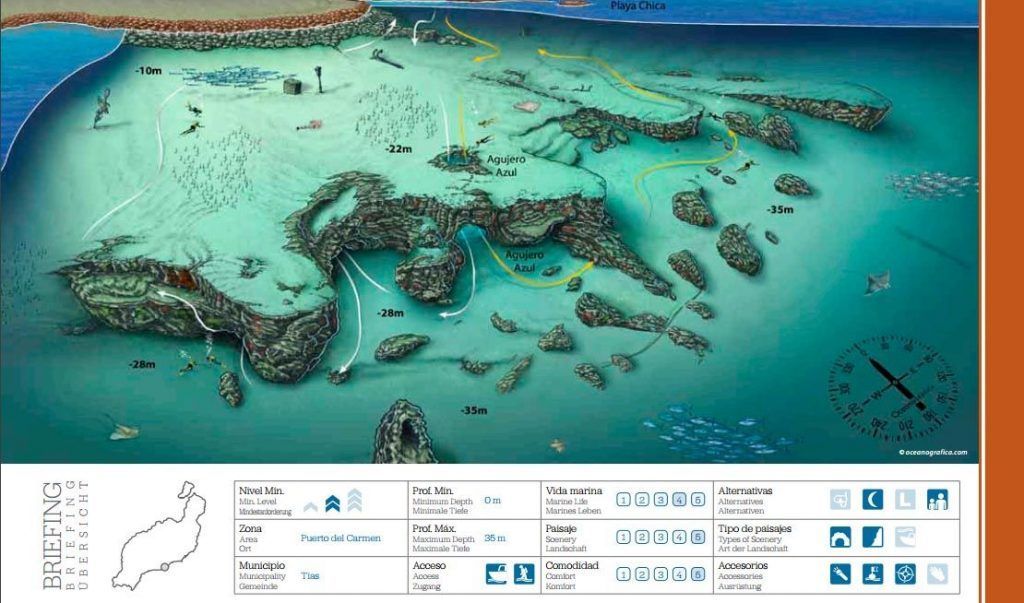
The Blue Hole is a volcanic tunnel that cuts through the drop-off from 22 to 32 metres, connecting the upper plateau with the wall that drops into the blue. It is a fantastic spot for black coral, seahorses in the shallows and pelagic life.
10. La Roncadera and Bajón de las Gerardias (La Graciosa)
18–35 m · Advanced
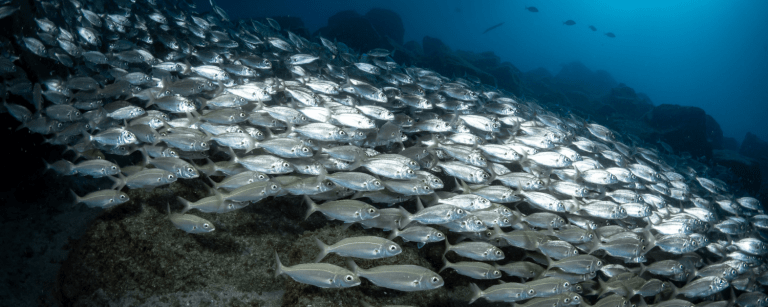
Diving in the La Graciosa Marine Reserve is a different experience. The highlight is La Roncadera, a natural amphitheatre carpeted with yellow and red gorgonians and huge schools of grunts. The Bajón de las Gerardias is unique for its concentration of this rare coral.
The Marine Reserve of La Graciosa and the Islets north of Lanzarote is the largest in Spain, covering more than 70,000 hectares. Diving requires prior authorisation, there is a daily quota of dives and boats, and shore and night dives are not allowed. You can check the rules on the website of the Spanish Ministry of Agriculture, Fisheries and Food.
All dive sites in Lanzarote
This guide covers ten, but there are many more. These are all our dive site guides, sorted by area:
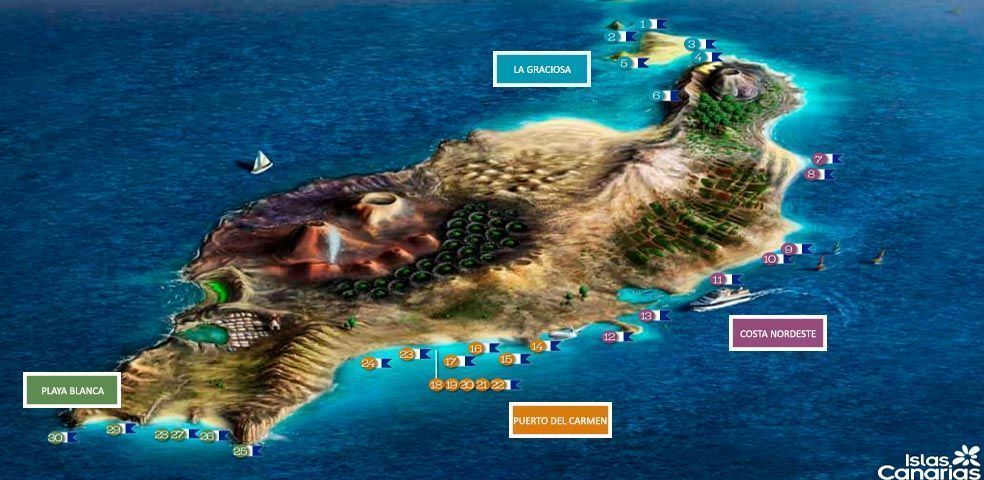
Playa Blanca
Puerto del Carmen
East and north-east coast
So, what is the best dive in Lanzarote?
There is no single answer. It depends on what you are looking for:
- Amount and variety of life: Playa Flamingo, the star of Playa Blanca.
- Depth, current and pelagics: Pechiguera Lighthouse.
- Art and artificial reef: Museo Atlántico.
- Volcanic vaults and tunnels: The Cathedral and Blue Hole.
- Gorgonians and marine reserve: La Roncadera and the Bajón de las Gerardias.
That is why we recommend combining several areas on a diving trip to Lanzarote.
How to choose your dives in Lanzarote
Your certification matters, but it is not the only thing. Your recent dives, your experience with current and depth, your air consumption, how comfortable you feel in the water and the sea conditions on the day all count too.
| Your level | Where to start |
|---|---|
| Open Water / Scuba Diver | Playa Flamingo, Punta Berrugo, Museo Atlántico, Las Coloradas, El Emisario, Las Lenguas and the shallower Quíquere wrecks |
| Advanced | Blue Hole, La Roncadera, the Bajón de las Gerardias and the deepest Quíquere wreck |
| Advanced / deep with current experience | The Cathedral and Pechiguera Lighthouse |
At Viva Blue Diving we plan our trips with all this in mind and choose the right sites for each group, with a maximum of 5 divers per guide. If you have not dived for a while, we recommend starting with a scuba refresher.
Frequently asked questions about diving in Lanzarote
What is the best area for diving in Lanzarote?
Playa Blanca is the most sheltered and varied area for all levels. Puerto del Carmen has the island’s most famous wall and cave dives, and La Graciosa offers the seabed of Spain’s largest marine reserve.
What is the best dive in Playa Blanca?
Playa Flamingo, for the amount and variety of marine life. It is suitable for all levels and is dived between 5 and 18 metres.
Do I need to be certified to dive the Museo Atlántico?
No. If you are not certified, you can visit it on a try dive with an instructor, from age 10 and no deeper than 12 metres. Certified divers always dive it with a guide from an authorised centre.
Do you need a permit to dive in La Graciosa?
Yes. The marine reserve requires prior authorisation and has a daily quota of dives and boats. It is normally arranged by the dive centre running the trip.
What level do I need for the Blue Hole or The Cathedral?
Advanced level. The Cathedral is also considered a deep dive, so you should have deep diving experience and training.
Can you dive in Lanzarote all year round?
Yes. The water is usually between 18 and 24 °C depending on the season, and angel sharks are seen most often from November to April.
Book your dives in Lanzarote
This guide is for information only. To check availability, requirements and prices, visit our dives page. If you do not dive yet, start with a try dive or the Open Water course.
See our dives